
Olympic Level High Roading
It was hard not to low road it with Daddy Ball

The boss who hired me into a big, scary job many years ago told me, “Always take the high road. You never regret taking the high road.”
It was a DBG-ism (that’s for David B. Gillig, a titan in the world of nonprofit fundraising), and that was just one of his “isms.” Another was “Walk with me,” when he stuck his head into my office briefly and then resumed his long strides down the hall, and I’d run to catch up, notepad in hand, ready to take down his direction or feedback. Sometimes he just wanted to actually walk with me and ask how I was doing or tell a funny story.
But it was the high road “ism” that stuck with me the most. Because it is applicable more frequently than I’d like, and because it’s true, of course. I have never, ever regretted taking the high road.
Going low is more satisfying in the moment. It’s a human gut reaction. Just because I’m in my 50s and at a stage in my career where emotional intelligence is an important part of the job, doesn’t mean I don’t have those impulses to fire off an angry email, roll my eyes, or laugh and ask: Are you effing kidding me?
It feels so good to go low. For a few minutes. And then it feels bad. Really bad.
This time last year, I had a very hard time taking the high road. I drafted several lengthy, angry texts and imagined elaborate dressing-downs of the people causing my family, especially my kids, so much stress and sadness.
I was in the worst season of my parenting life – and I have dealt with some serious stuff over the years – and it was weighing on me, affecting my sleep, my appetite, and my outlook for weeks.
The source of this hardship? Little League. Yes, Little League. More specifically, the parents in Little League, and the unchecked abuse of power by a small group of board members.
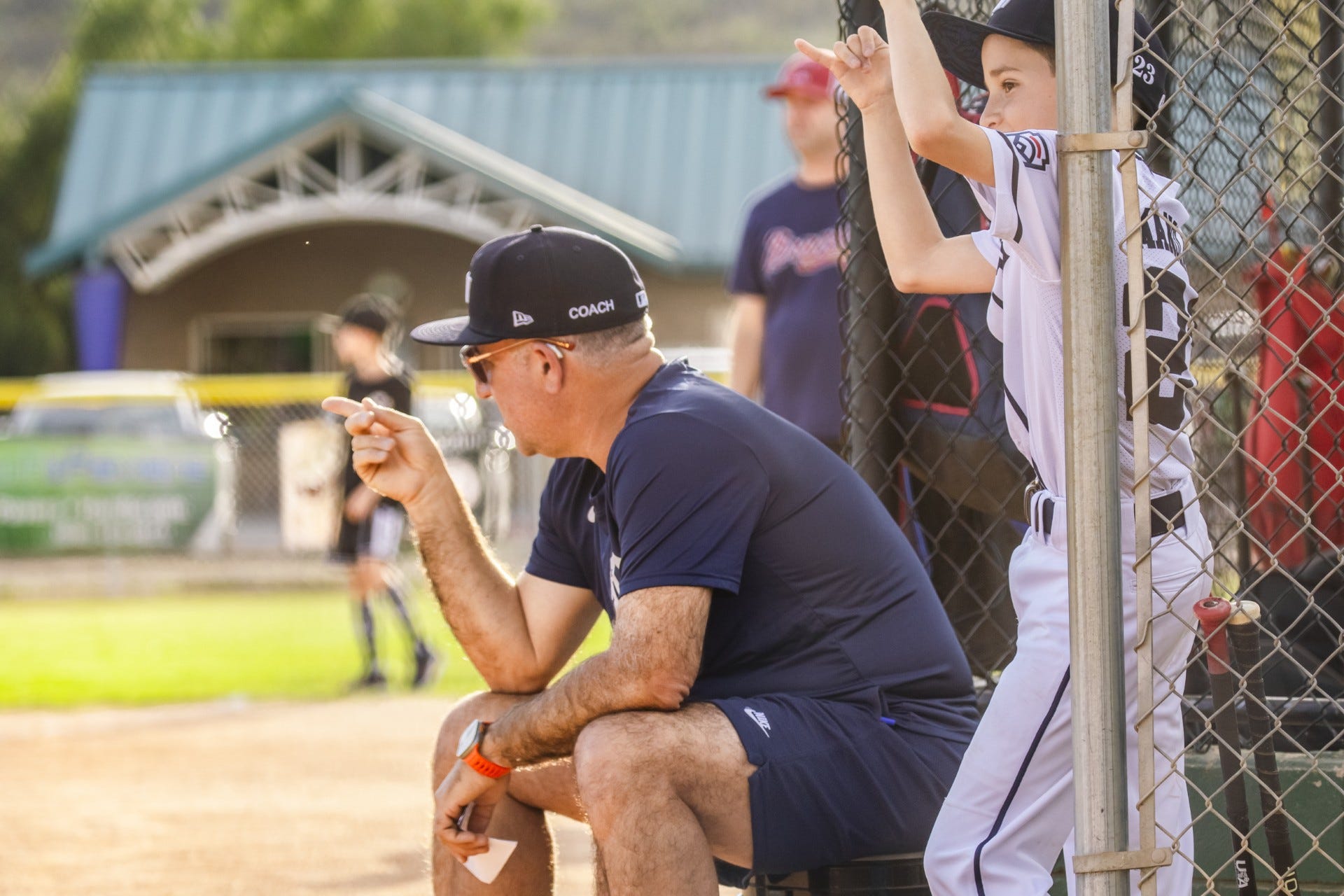
It felt like the worst of high school, being on the outside looking in, wondering what I had done to deserve being cast out. One son lost his spot on the All-Star team, and the other son lost his job at the snack bar. They were 11 years old and didn’t understand what was happening.
It was one thing to see my husband being treated poorly. But it was quite another when they set their sights on my boys. We did push back, and we did so within the system. And while it was polite and professional, it didn’t do us any good.
Somehow, my husband, who was coaching my son’s team and bore the brunt of all of it, managed to finish the season and stay positive with his team.
We found a wonderful new travel ball team to play with, and it’s all positive and drama-free, thank goodness.
Since then, I’ve learned that what I thought was a term to describe our unique experience of “Daddy Ball,” in which parents who are coaches and/or board members favor their children and create problems for other kids, is actually a pretty universal experience.
And that what felt like an isolating experience actually is quite common, evident in the flood of responses from across the country to my husband’s posts on the topic – from dads to professional ballplayers and even a Major League mental performance coach who experienced it himself when his son played Little League.
Best of all, I can see these parents at the store or at events, and not be ashamed of something I said or did, because I took the right road. In fact, I high-roaded it to the extreme.
DBG, I tell you, it was the Olympics of high roading.
High school is around the corner for our boys, and if they attend the local high school as their sister did, we’ll likely all be in the stands together again. And it’s a good thing I didn’t fire off those texts or lecture anyone in the parking lot.
I took the high road, and man, it was hard. But like DBG said, I don’t regret it one bit.
When did anyone ever feel good about taking the easy way out except in the short term as Elizabeth points out? And when we take the low road we encourage others to do the same. What values are achieved on the low road? Now ask the same questions about the high road. Well done, Elizabeth.